The pants in the science report
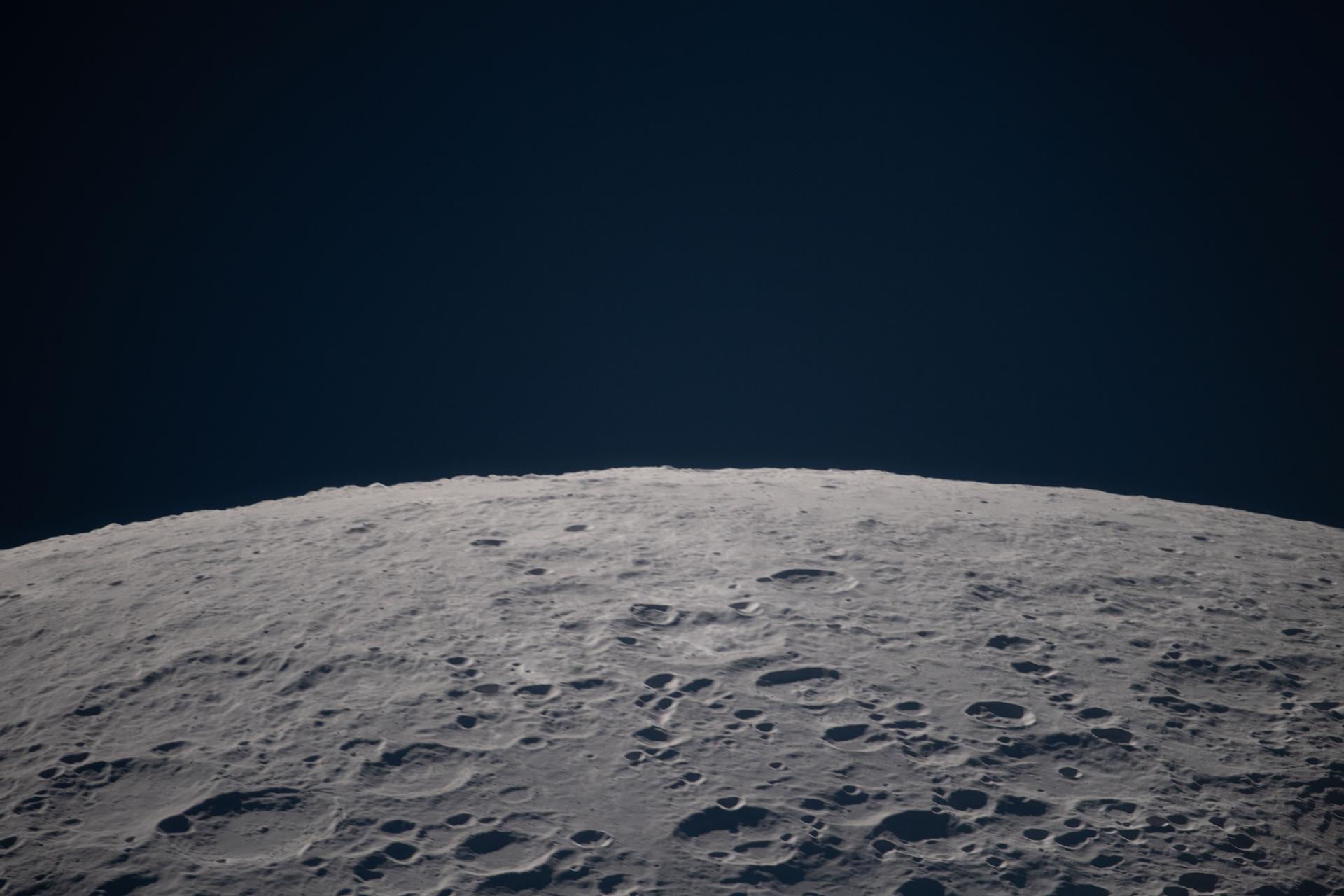
Koch remembered a matte brown with a hint of olive. She compared it with her crewmates’ pants and pointed out which pair she meant. NASA kept the gesture in brackets in the transcript. The report later recommends carrying a physical color wheel so the crew and the scientists on the ground can refer to the same swatch.
Read Koch’s observation, p. 44 · Read the recommendation, p. 115 (PDF)
One side for sand, one for the sea
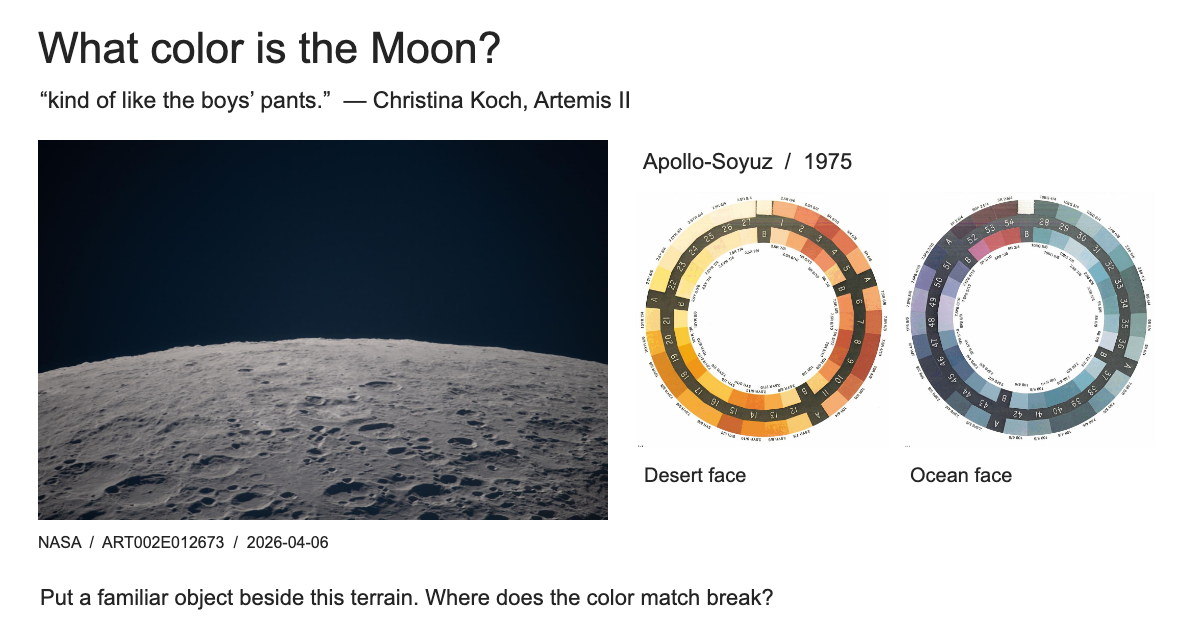
In 1975 the Apollo-Soyuz crew took a two-sided wheel into Earth orbit. They could look through the hole, turn the wheel until a chip matched the view below, and report its number. The warm side held 54 samples for deserts. The other 54 were for water. The two scans above come from the mission report.
Desert plate, p. 638 · Ocean plate, p. 639 (NASA SP-412, PDF)
Put something you own beside the Moon
The board holds the lunar photograph, both wheel faces and Koch’s observation. Add a photo of something whose color you know by heart. Move it next to a patch of lunar terrain and write down where the match breaks.
Download the editable board Save the reference sheet (PNG)
On a computer, open the Galta canvas menu, choose the three dots and select Import canvas.